
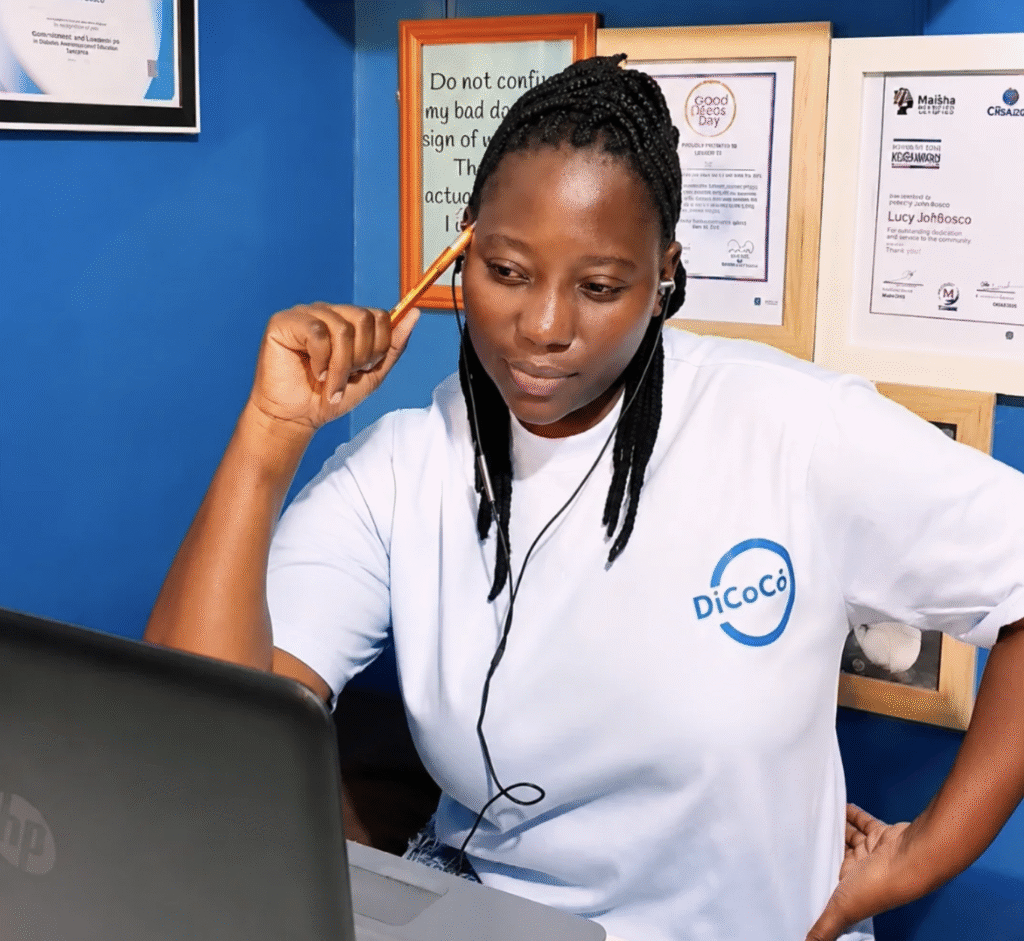
Behind every diabetes diagnosis is a human story. For Lucy John Bosco, living with Type 1 diabetes has been a lifelong journey shaped by family support, personal challenges, education, and a determination to make life better for others living with the condition.
Living with Type 1 diabetes is a daily responsibility. It involves monitoring blood glucose, taking insulin, making health-related decisions, and learning how to respond to the body’s changing needs.
However, the experience of living with diabetes is not the same everywhere.
Access to insulin, blood glucose testing supplies, diabetes education, healthcare professionals, and community support can vary significantly depending on where someone lives.
For Lucy John Bosco, a Tanzanian diabetes advocate, this reality has shaped not only her personal journey but also her commitment to educating and empowering communities.
In a conversation featured on the podcast Exploring Type 1 Diabetes with Isa, Lucy shared her experiences growing up with Type 1 diabetes, overcoming stigma, navigating healthcare challenges, and building initiatives to support people living with diabetes in Tanzania.
Her story is a powerful reminder that diabetes does not define a person’s potential.
Growing Up with Type 1 Diabetes
Lucy remembers being told she had diabetes when she was around 10 years old.
However, according to her mother, who was a medical doctor, Lucy had been living with the condition from a much earlier age.
Her mother had already been administering insulin injections, although Lucy did not fully understand why at the time.
When she eventually learned about her condition, she was fortunate to have a supportive family.
Her mother, brothers, and other relatives helped her understand diabetes and navigate everyday life.
She recalls that she never experienced significant stigma within her immediate family. Instead, she had people she could approach whenever she had questions or needed support.
However, her experience outside the home was different.
Facing Stigma at School
One of Lucy’s early challenges came when she started attending school.
Managing blood glucose sometimes meant needing permission to leave the classroom, particularly when experiencing high or low blood sugar.
But not everyone understood her needs.
She recalls occasions when teachers became frustrated with her requests to use the toilet, treating them as unnecessary interruptions.
Another experience that deeply affected her involved the identification labels used for students with medical conditions.
Lucy explained that she disliked wearing a shirt with a prominent red label identifying her health condition.
Rather than making her feel protected, the label sometimes made her feel different from other students.
Some classmates began pointing fingers and discouraging others from playing with her.
It was an experience that made her uncomfortable.
When she shared what was happening with her mother, the advice she received was simple but powerful: educate people.
That advice became an important turning point in her journey.
Lucy began explaining her condition to classmates, teachers, and friends. She wanted the people around her to understand what Type 1 diabetes was, what could happen when her blood glucose became too high or too low, and how they could support her during an emergency.
Her goal was to create a safer environment for herself through awareness and understanding.
Diabetes Does Not Have to Limit Your Dreams
As Lucy prepared to continue her education outside Tanzania, she had concerns about how she would manage diabetes in another country.
She remembers asking her mother whether travelling to Uganda for secondary school would be possible while living with Type 1 diabetes.
Her mother’s response became one of the most important lessons of her life:
Diabetes is never an obstacle.
Lucy gradually learned not to question her abilities or place unnecessary limitations on herself because of her diagnosis.
She understood that being aware of her condition was important, but so was believing in herself.
Whenever she travelled or stayed somewhere for an extended period, she made an effort to inform the people around her about her diabetes.
She explained that she used insulin, what symptoms she might experience when her blood glucose was high or low, and what kind of assistance she might need.
This practice of communicating openly about diabetes helped her build safer environments and encouraged others to become more knowledgeable.
Her message is especially important for young people living with Type 1 diabetes: having diabetes should never mean giving up on education, career opportunities, sports, or personal ambitions.
A Life-Threatening Experience That Changed Her Perspective
One of the most difficult experiences in Lucy’s journey occurred when she was still young.
At one point, she noticed that her blood glucose readings were regularly within what appeared to be normal ranges.
She did not fully understand the honeymoon phase of Type 1 diabetes and mistakenly believed that she no longer needed insulin.
She eventually stopped taking it.
After several weeks, she became seriously unwell.
While travelling from Uganda to Tanzania by bus, she recognized that her condition was deteriorating.
Before the journey continued, she informed the bus driver that she had diabetes and explained that she might need medical attention.
She also provided her passport and phone so that the driver and others could contact her mother if necessary.
According to Lucy, she eventually lost consciousness and was taken to the hospital after the journey.
She later learned that she had experienced diabetic ketoacidosis (DKA), a serious and potentially life-threatening complication of insulin deficiency.
She spent approximately three weeks in the hospital.
Remarkably, the bus driver and other passengers helped ensure she reached medical care in Tanzania. Lucy says she still communicates with that driver.
The experience reinforced the importance of diabetes education and understanding the role of insulin.
For people living with Type 1 diabetes, insulin is essential for survival. Insulin should never be stopped without medical guidance, even when blood glucose readings appear normal.
Lucy now uses this experience to encourage others to understand their condition and take diabetes management seriously.
Turning Personal Experience into Public Advocacy
Rather than allowing her experiences to remain personal, Lucy decided to use them to educate others.
After completing her university education, she pursued a master’s degree in mass communication.
Her decision was driven by a particular concern: the way diabetes was discussed and represented in the media.
She recognized that words and statements used in public communication could unintentionally create stigma or reinforce misconceptions.
She wanted to understand how to communicate health information effectively to different audiences, particularly young people.
Her communication studies gave her an opportunity to approach diabetes awareness from a different perspective.
She later worked in radio, where media organizations increasingly approached her when they wanted to discuss diabetes.
She also contributed to a local newspaper through a column titled “Maisha na Kisukari,” meaning “Life with Diabetes.”
Through these platforms, she used her personal experience and communication skills to challenge misconceptions and encourage better understanding.
One of her approaches was to engage audiences beyond traditional medical programs.
By participating in music-focused radio programs, she reached younger listeners who might not necessarily tune in to health discussions.
These conversations also helped her connect with musicians living with diabetes who had not publicly disclosed their condition.
For Lucy, awareness was not simply about sharing medical facts. It was about creating spaces where people could talk about diabetes without fear or embarrassment.
Taking Diabetes Education Beyond Dar es Salaam
In 2018, Lucy decided to register a non-governmental organization to expand her community work.
She recognized that while diabetes information and healthcare resources could be more accessible in major urban areas, people living in smaller towns and rural communities often faced additional challenges.
Her concern was that many people knew about diabetes but did not necessarily understand how to live with it.
Families also needed education.
For example, a person living with diabetes might have a family member who wanted to help but did not understand blood glucose monitoring, medication, nutrition, or how to respond to an emergency.
Lucy wanted to close this knowledge gap.
She and her team began organizing community outreach activities beyond Dar es Salaam, visiting schools, offices, and communities whenever resources allowed.
Their work included diabetes awareness, education, community engagement, and screening activities.
They also sought opportunities to collaborate with other diabetes organizations and health stakeholders in Tanzania.
Her focus was clear: diabetes education should not be limited to people who live in major cities.
Rural Communities and the Challenge of Misinformation
Lucy’s experiences in her home village in southern Tanzania revealed another important challenge.
In some rural communities, diabetes was misunderstood and sometimes associated with witchcraft or traditional beliefs.
She encountered people who attributed unexplained weight loss and other symptoms to supernatural causes rather than considering the possibility of diabetes.
Some sought help from traditional healers before visiting a healthcare facility.
Lucy recognized that addressing these beliefs required patience, respect, and effective communication.
Rather than approaching traditional practitioners with criticism, she chose to engage them respectfully.
She explained that when someone experienced symptoms such as frequent urination, excessive thirst, and unexplained weight loss, diabetes should be considered and the person should be referred to a qualified healthcare professional.
Her approach was to encourage collaboration rather than confrontation.
She understood that traditional practitioners could be influential figures in their communities and could potentially help direct people towards appropriate medical care.
This experience highlighted the importance of community-based education that considers local beliefs, culture, and social structures.
Healthcare Access: The Difference Between Knowing Diabetes and Living with It
Another major issue Lucy highlighted was the difference between accessing healthcare in urban and rural areas.
In cities, people may have greater opportunities to access health information, healthcare facilities, and diabetes testing supplies.
In rural communities, however, some health facilities may face shortages of blood glucose testing strips and other essential resources.
She also observed that general healthcare professionals might understand diabetes from their medical training but have limited opportunities to gain practical experience in supporting people living with the condition.
This distinction matters.
Managing Type 1 diabetes involves more than knowing the medical definition of the condition.
It requires practical knowledge of insulin administration, blood glucose monitoring, nutrition, hypoglycaemia, hyperglycaemia, and everyday decision-making.
Lucy has therefore emphasised the value of collaboration between community advocates and healthcare professionals.
She described developing a relationship with a doctor in her home village, allowing them to exchange knowledge and discuss ways to better support people living with diabetes.
Her experience demonstrates why diabetes education should reach healthcare providers, families, schools, and communities.
The Vision: A Diabetes Information and Education Centre
One of Lucy’s most important ambitions is to establish a Diabetes Information and Education Centre in her home village.
The vision emerged from her experiences meeting people who lacked access to reliable information and appropriate diabetes support.
The proposed centre is intended to serve as a community resource, with several programmes designed to address different needs.
1. Diabetes Education and Community Outreach
The programme will focus on educating communities, visiting schools, mobilising residents, raising awareness, and conducting screening activities in collaboration with local healthcare facilities.
The aim is to help people recognise diabetes symptoms, understand the condition, and seek appropriate medical attention.
2. Youth Mentorship Programme
Lucy believes that young people living with diabetes should have access to opportunities beyond healthcare.
A young person with Type 1 diabetes may dream of becoming a professional footballer, journalist, musician, or another professional.
However, living in a rural community may limit access to career guidance, mentorship, and professional networks.
Through the proposed mentorship programme, Lucy hopes to connect young people with established professionals, sports organisations, media houses, and other institutions.
The goal is to show young people that diabetes does not take away their right to dream, pursue opportunities, and build successful careers.
3. Women’s Economic Empowerment
The proposed centre also includes an initiative focused on women’s economic empowerment.
Lucy highlighted the limited variety of vegetables available in her home village, where cassava leaves are among the commonly accessible options.
She envisions small-scale vegetable farming as a way to create income opportunities while also improving access to a wider variety of nutritious foods.
The programme would connect economic empowerment with nutrition education and community well-being.
4. Community Media Hub
Another part of the vision is a media hub with recording facilities.
The proposed space would allow the community to produce educational content, record personal testimonies, develop radio programmes, and create awareness materials.
Through storytelling, radio plays, and other forms of media, the initiative aims to make health information more accessible and relatable.
For Lucy, communication is an important tool for changing attitudes and creating informed communities.
The centre is envisioned as more than a diabetes education facility. It is intended to become a platform for community development, opportunity, and empowerment.
Changing the Conversation About Food and Diabetes
Lucy also raised an important issue concerning the advice sometimes given to people living with diabetes.
She explained that people are frequently told not to eat certain foods, without always receiving practical guidance on how to manage their diets.
She believes that overly restrictive advice can create unnecessary stress, especially in communities where food choices may be limited.
For example, rice may be one of the few available meal options in a particular setting.
Rather than simply telling someone not to eat rice, diabetes education should help them understand portion sizes, meal balance, carbohydrate content, and how food affects their blood glucose.
Her broader message is that people need practical, individualised nutrition education rather than fear-based restrictions.
Food choices should be discussed with qualified healthcare professionals or dietitians who understand the individual’s treatment and circumstances.
A Message to Every Person Living with Type 1 Diabetes
When asked what she would say to someone living with Type 1 diabetes, or even to her younger self, Lucy emphasised the importance of diabetes self-awareness.
She believes that understanding your condition is one of the foundations of living well with diabetes.
Her advice centres on three important ideas:
- Learn how your body responds to changes in blood glucose.
- Invest in understanding and taking care of yourself.
- Believe in yourself and never allow diabetes to define your potential.
She also emphasised the importance of rejecting self-stigma.
People should not automatically place restrictions on their own ambitions or believe that diabetes prevents them from participating in everyday activities.
With appropriate medical support, education, and preparation, people living with Type 1 diabetes can pursue meaningful and fulfilling lives.
Beyond a Diagnosis: A Story That Inspires Change
Lucy’s story reflects the realities of living with Type 1 diabetes in a setting where healthcare access, resources, awareness, and cultural understanding can differ significantly between communities.
It is also a story of how personal experience can become a powerful tool for advocacy.
From navigating school challenges to speaking on radio, contributing to newspapers, organising community outreach, and developing a vision for a rural education centre, Lucy has continued to use her experiences to help others.
Her journey reminds us that people living with diabetes should not be viewed only through the challenges of their condition.
They are students, professionals, parents, athletes, creatives, leaders, and changemakers.
Diabetes may be part of their lives, but it does not have to determine how far they can go.
At DiCoCo, we believe that access to diabetes education, understanding, and community support should not depend on where someone lives.
Together, we can challenge stigma, close information gaps, and create communities where people living with diabetes are understood, supported, and empowered.
Because living with diabetes is not the end of a dream.
About DiCoCo
Diabetes Consciousness for Community (DiCoCo) is committed to promoting diabetes awareness, education, advocacy, and community empowerment in Tanzania.
Through education, outreach, and partnerships, we aim to build communities that understand diabetes and support people living with the condition.
Learn more about our work: https://dicoco.or.tz/
Knowledge. Awareness. Support. Empowerment.